Overview and History of Bangladesh
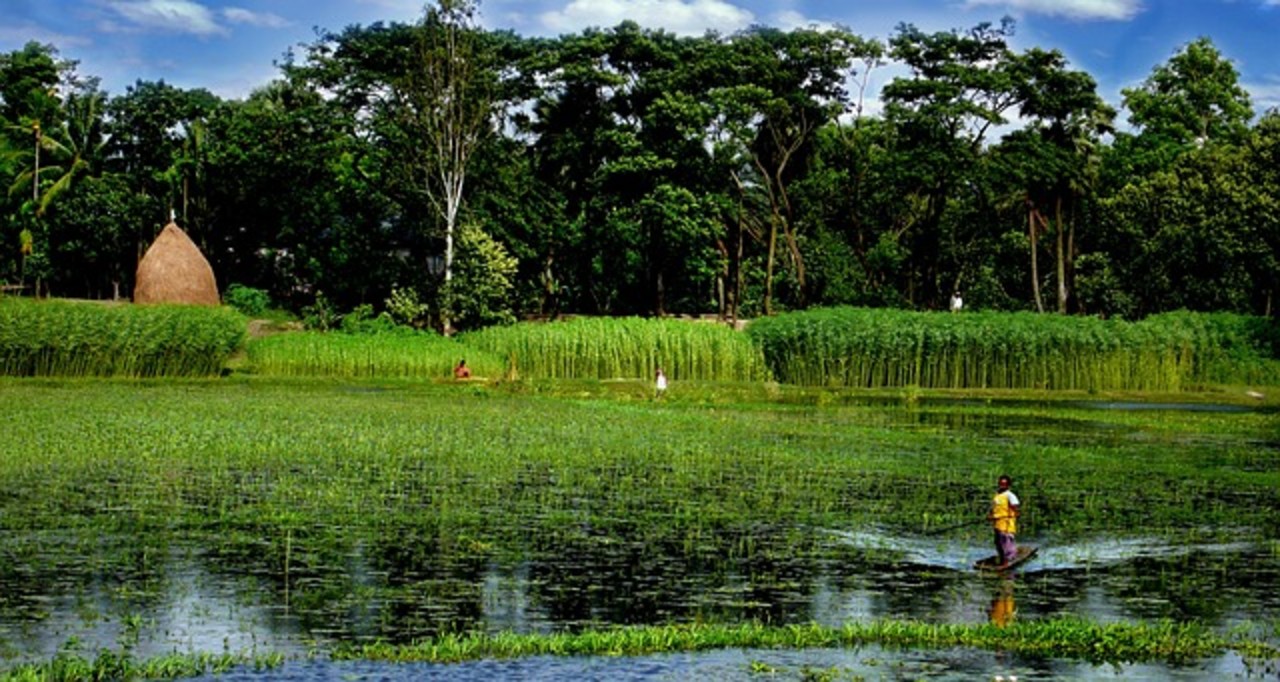
Bangladesh is a country in South Asia, located on the northeastern edge of the Indian subcontinent. It's bordered by India on the west, north, and east, Myanmar to the southeast, and the Bay of Bengal to the south. This strategic position places Bangladesh at the crossroads of South Asia and Southeast Asia, offering access to the Bay of Bengal and the Indian Ocean. The country is divided into three main regions: the fertile Ganges Delta, the Madhupur and Barind plateaus in the northwest and central parts, and the hill ranges in the northeast and southeast. Bangladesh is known as the "Land of Rivers" because of its extensive river systems, including the Padma (Ganges), Brahmaputra (Jamuna), and Meghna rivers, which play a crucial role in its geography, agriculture, and daily life. Despite its small size, Bangladesh is one of the most densely populated countries in the world, with a population exceeding 160 million. The capital city, Dhaka, is one of the most populous cities globally. The country faces challenges such as political instability, economic disparities, and natural disasters. However, Bangladesh has made remarkable progress in areas like education, healthcare, and economic development, particularly in the ready-made garment industry.
As for Bangladesh's history, it was once part of the Bengal region, home to ancient kingdoms and empires such as the Bengal Sultanate and the Mughal Empire. Islam became the dominant religion in the 13th century, and the region flourished as a center of trade and culture. In the 18th century, Bengal fell under British colonial rule, becoming part of British India. Following the partition of India in 1947, the eastern part became East Pakistan, forming a new nation with West Pakistan. The struggle for independence intensified over time due to linguistic, cultural, and political differences between East and West Pakistan. The turning point came in 1971 when Sheikh Mujibur Rahman declared independence for Bangladesh, leading to the Bangladesh Liberation War. The war was marked by significant loss and suffering, with an estimated 3 million people killed and widespread atrocities committed. On December 16, 1971, Bangladesh achieved victory, and the country was officially recognized as an independent nation.
In the decades since independence, Bangladesh has faced challenges including political instability, economic disparities, and natural disasters. However, the country has made remarkable progress in areas such as education, healthcare, and economic development. The ready-made garment industry has become a significant contributor to the economy, and Bangladesh has also made strides in technology and infrastructure. Despite these advancements, political tensions and governance issues continue to shape the nation's trajectory.
Culturally, The Bengali language is central to national identity, and the country celebrates various festivals like Pohela Boishakh (Bengali New Year), Eid al-Fitr, and Durga Puja with enthusiasm. Overall, culture, food, and architecture are important in everyday life, with traditions influenced by Hinduism, Buddhism, and Islam. Bangladeshi food is full of flavor, with popular dishes like biryani and pitha show the variety of regional tastes. The architecture mixes religious and historical styles, seen in famous places like the Lalbagh Fort and Mahasthangarh. Traditional clothing also changes from region to region, each with its own unique designs and craftsmanship.